Technology Due Diligence
Independent executive assessment of a product, platform or manufacturing partner's real technical position.
- — Hardware & firmware
- — API & cloud architecture
- — Certification & lifecycle
- — Commercial suitability

Asia Technology & Manufacturing Intelligence
Strategic Tracking is retained by boards and executive teams as their independent advisor on tracking technology, IoT and connected hardware across Asia — technology due diligence, manufacturing strategy, supplier validation and supply chain intelligence.
Why organisations retain us
On the ground in China
These are unedited photographs from recent Strategic Tracking work in China — an SMT production and assembly audit at a manufacturer in Suzhou, component traceability checks in the goods store, partner meetings, and market work in Shanghai. Every assessment we deliver is based on first-hand observation of the lines, the test benches and the people running them, not a video call or a supplier brochure.
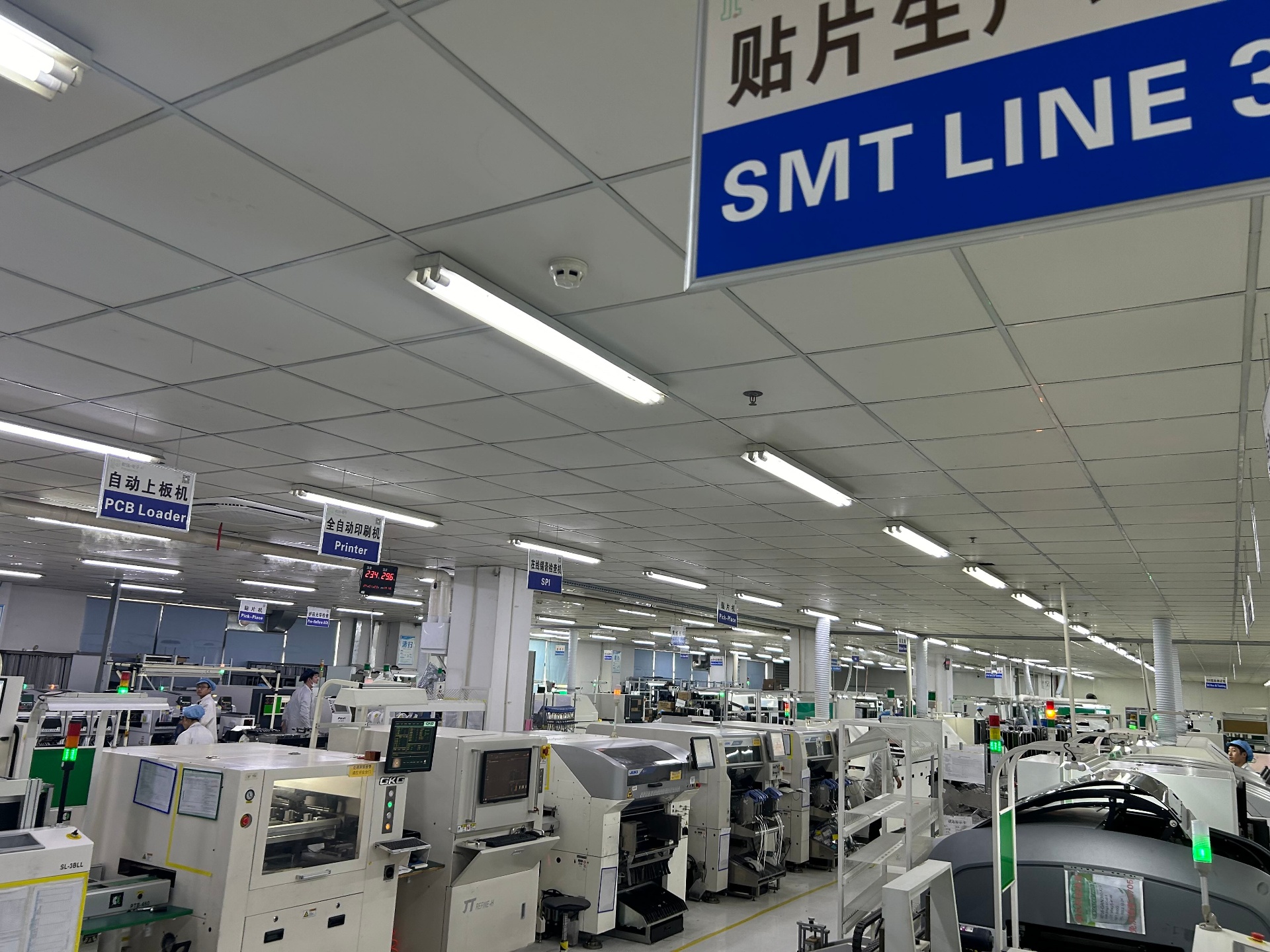
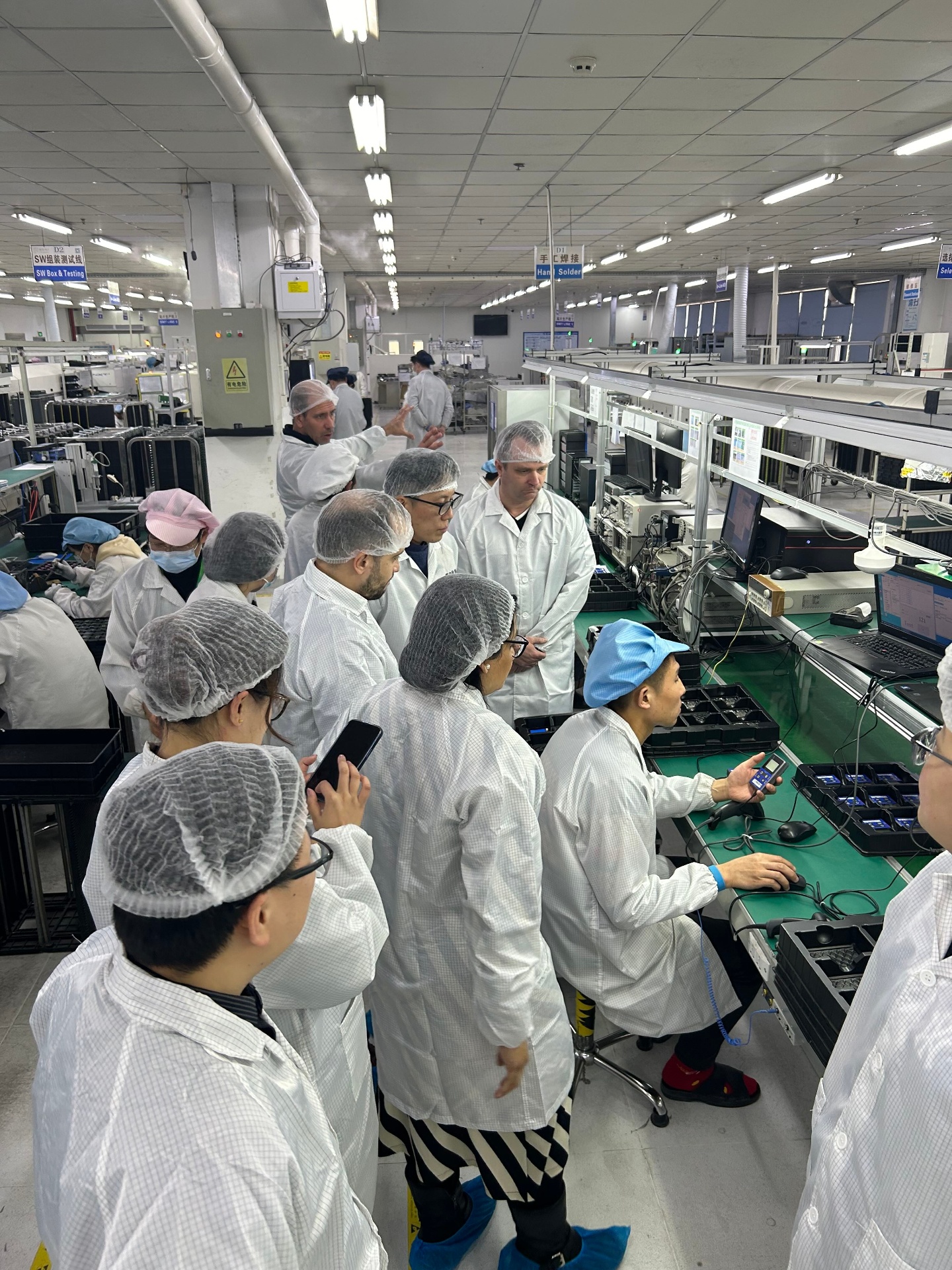
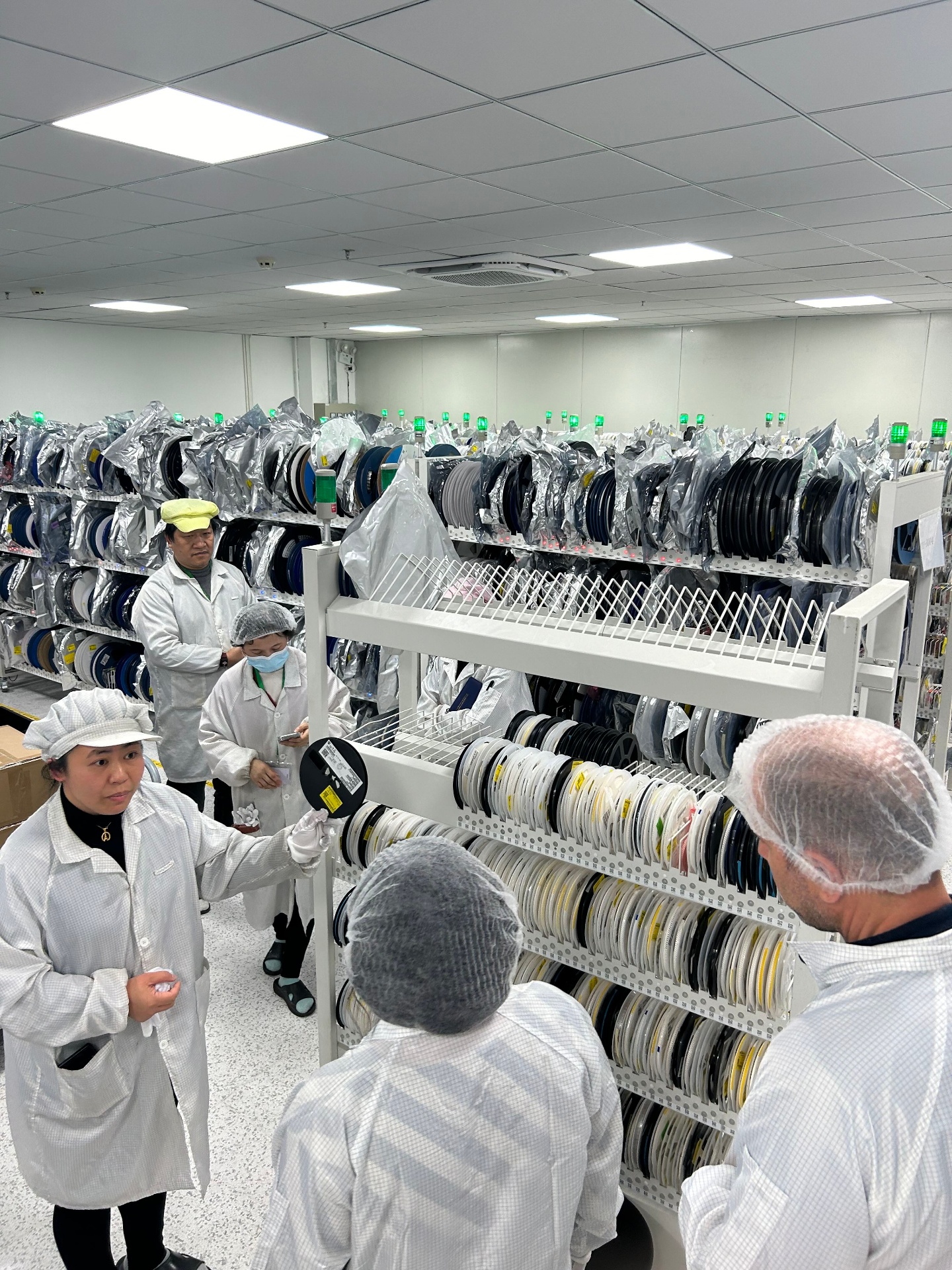
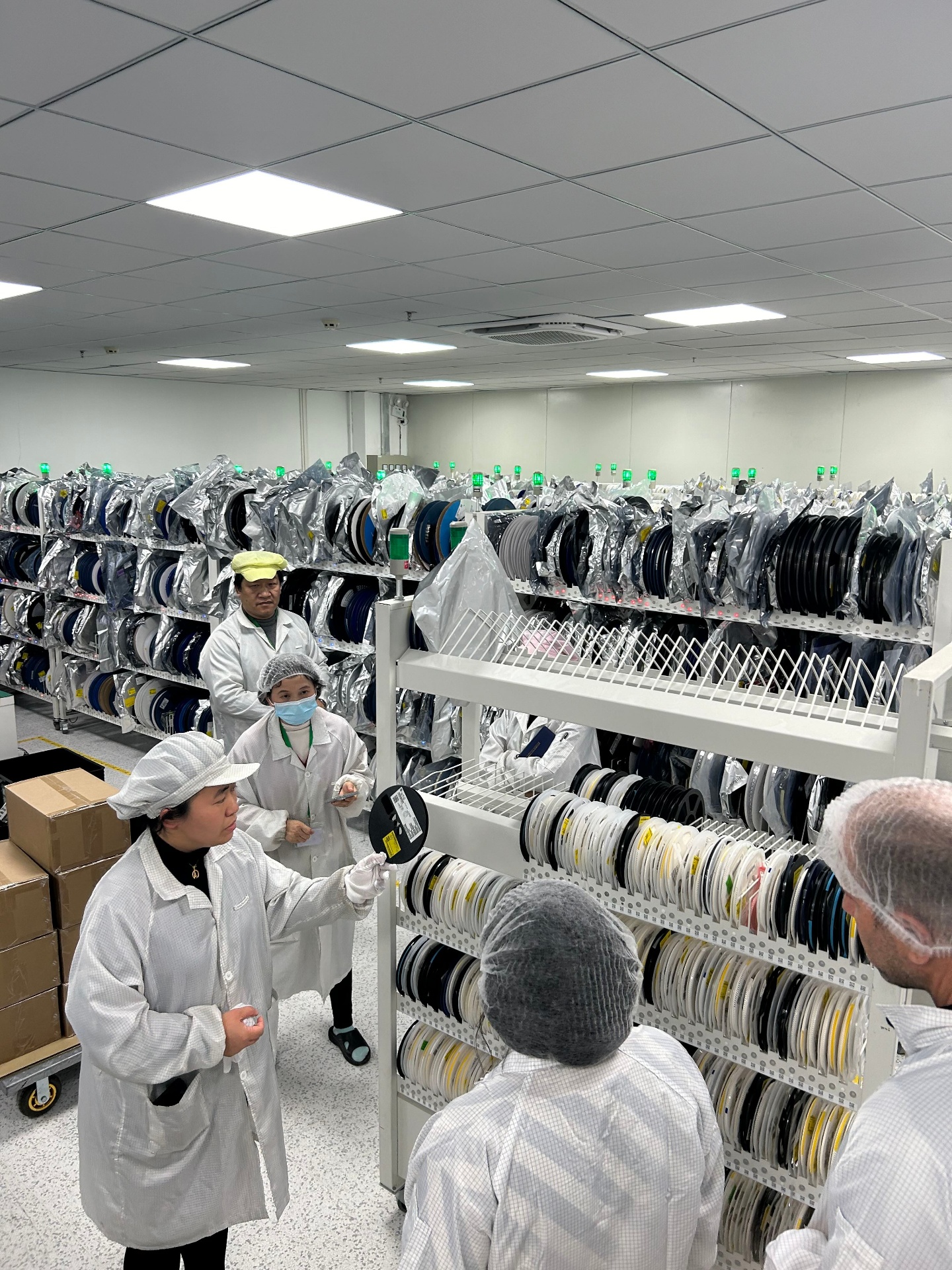
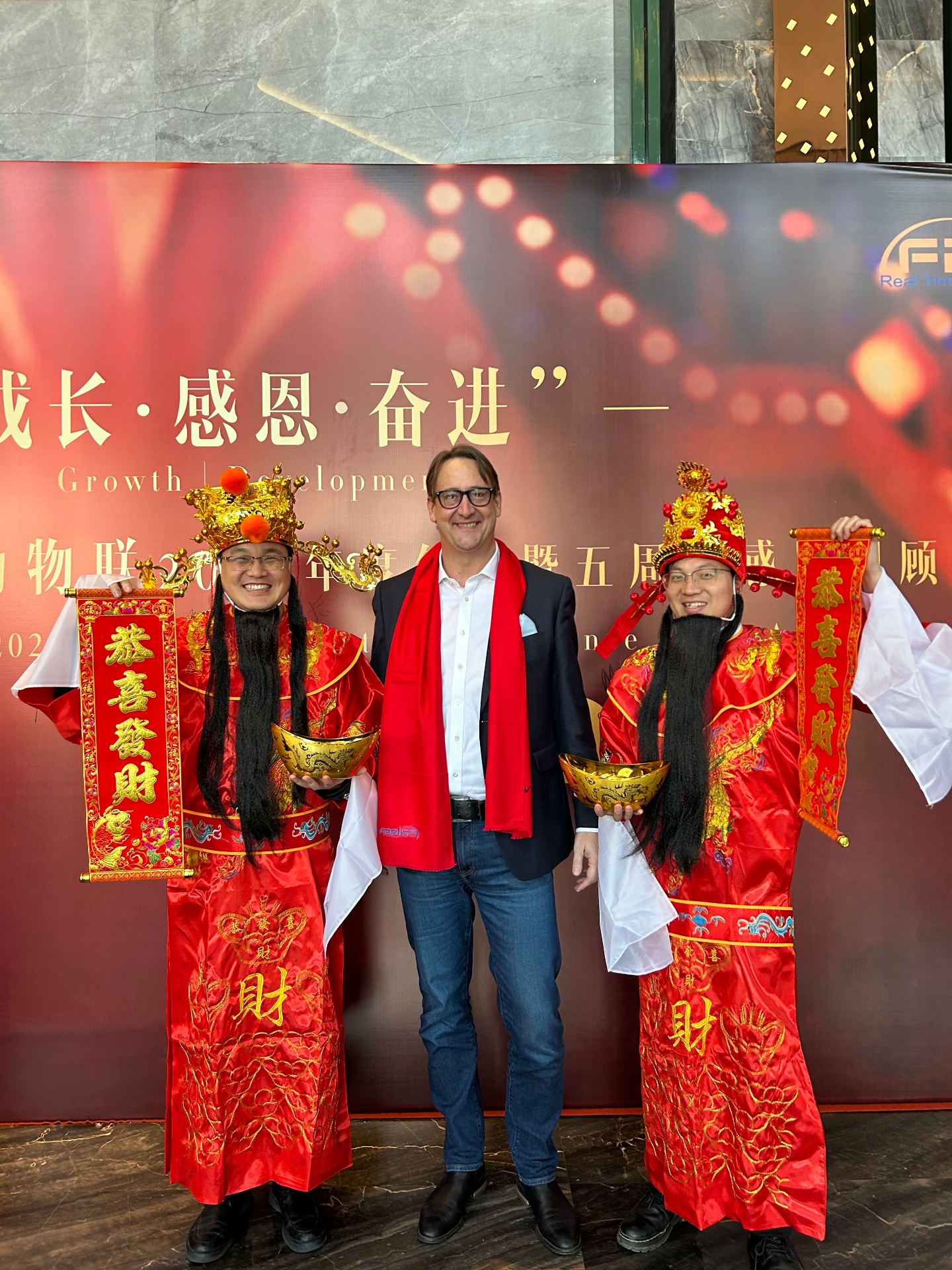

First-hand observation, not second-hand assurance
Audits, capability reviews and partner meetings are conducted in person by Matthew Holland. Client identities and findings remain confidential — the photographs above are shared with permission of the host facilities.
Discuss a factory visitRegional coverage
Strategic Tracking undertakes regular engagements across Asia's leading electronics and manufacturing centres, maintaining an active presence across key technology manufacturing hubs rather than operating from a single location.
That regional view matters: the right answer for a connected hardware product is increasingly a combination of markets rather than a single country.
Shenzhen, Dongguan, Guangzhou and Hong Kong — the deepest electronics ecosystem in Asia.
Growing electronics assembly capability and a central pillar of China +1 strategies.
Established electronics and semiconductor manufacturing with mature export capability.
Regional headquarters, advanced manufacturing, finance and technology innovation.


Advisory services
Independent executive assessment of a product, platform or manufacturing partner's real technical position.
Where a product should be built across Asia, and how to structure it for resilience.
Evidence-led validation of a manufacturing partner's capability, credibility and commercial fit.
Commercial and technology risk evaluated before a supplier relationship is committed to.
Identification of credible manufacturing, technology and commercial partners across Asia.
Structured regional intelligence on suppliers, technologies and manufacturing trends.
Manufacturing strategy
Retaining Chinese capability while qualifying an additional country as a parallel base.
Designing manufacturing arrangements that survive disruption, tariffs and single-country risk.
Qualifying credible alternatives before dependency becomes exposure.
Aligning manufacturing location with certification, tariff and target-market requirements.
Technology due diligence
Hardware capability
Design competence, build quality and manufacturability against your specification.
Firmware
Maturity, ownership, update and security patching process for deployed devices.
API maturity
Documentation quality, stability, rate limits and real integration readiness.
Cloud architecture
Platform design, hosting location, data ownership and operational resilience.
Roadmap & lifecycle
Product direction, component availability and end-of-life exposure.
Certification
Which approvals exist, for which exact model, valid in which markets.
Integration readiness
How realistically the technology fits your existing stack and processes.
Commercial suitability
Whether the technology is a sound long-term commercial fit, not just a technical one.
Findings are delivered as technical observations and a commercial suitability judgement. Detailed assessment frameworks are shared with clients following qualification.
Technology & supply chain risk
Concentration on a single manufacturer, cluster or country, and what a disruption would actually cost.
Who owns and controls the software in your device, and what happens if the relationship ends.
Where platform data is stored and processed, and whether that satisfies your customers and regulators.
Update mechanisms, credential handling and device management assessed as commercial risk, not as a security audit.
Component availability, last-time-buy exposure and the cost of a forced redesign.
Regulatory and trade exposure affecting components, technology and destination markets.
Second-source readiness, transferability of tooling and documentation, recovery timelines.

Independent advisory
Whether the technology genuinely does what your product and customers require.
Whether the arrangement stands up commercially over the life of the product.
What could go wrong, how exposed you would be, and what mitigates it.
Whether this is a relationship worth building, or a transaction to limit.
No supplier commissions
Recommendations are based on technical suitability, commercial fit, risk and long-term partnership potential — never on supplier commissions. Strategic Tracking is retained and paid by the client, and takes no payment of any kind from manufacturers. That independence is what allows the recommendation to be “do not proceed”.

Who we help
Engagements are strategic rather than transactional. Organisations retain us at the point of a significant technology, manufacturing or partner decision — not to buy product at the lowest available price.

Typical engagements
Technology due diligence on a connected hardware platform ahead of an investment decision.
Manufacturing strategy review comparing Greater China and Southeast Asian options for a logistics technology business.
Independent supplier validation for a cold chain monitoring programme.
Comparative technology assessment of competing asset tracking devices before a platform commitment.
Supply chain risk and dependency assessment for an industrial IoT product line.
Partner identification and technology scouting across Asian electronics manufacturing hubs.
How we work
A confidential conversation to understand your objectives, technology and risk exposure.
A written proposal setting out objectives, scope, deliverables and commercial terms.
Independent work across the relevant Asian technology and manufacturing hubs.
An executive assessment with evidence, options and a clear recommendation.
Typical deliverables
Executive findings
A concise assessment written for board and executive decision-makers.
Technology assessment
Independent judgement on capability, maturity and integration readiness.
Risk assessment
Dependency, continuity and commercial exposure, made explicit.
Strategic options
Manufacturing and partner options with the trade-offs of each.
Commercial view
Where the commercial position is strong, weak or negotiable.
Recommended next steps
A sequenced action plan aligned to your decision timeline.
Engagement models
Ongoing advisory retainers
Quarterly Manufacturing Review
A recurring review of manufacturing partners, performance, risk and alternatives.
Technology Intelligence
Ongoing briefing on emerging tracking, sensing and connected hardware technology.
Supplier Monitoring
Continuous monitoring of incumbent and alternative manufacturing partners.
Competitive Intelligence
Structured observation of competing products and technologies across the region.
Asia Market Updates
Regular updates on regional manufacturing, regulatory and market developments.
Partner Search
Continuous identification of new manufacturing, technology and commercial partners.
Confidentiality
Strategic Tracking regularly works with new product concepts, emerging technologies, commercial negotiations and supplier evaluations.
All engagements remain confidential unless permission is given. Nothing on this page identifies a client, a manufacturing partner or a live project.
Insights
Assess four layers together rather than in isolation. Legal: the registered entity, its scope of business and its export history. Physical: independent confirmation that the lines, equipment and engineering staff for your product category genuinely exist. Technical: quality procedures, test capability, in-house design competence and certification issued for your exact model in the manufacturer's own name. Commercial: capacity against your volumes, warranty and failure-rate evidence, IP and tooling ownership, and financial stability. A manufacturer that passes on documents but fails on independent verification is the most common failure mode.
It depends on the product, not on headline labour cost. Greater China retains the deepest electronics component ecosystem, the widest supplier choice for GNSS, cellular IoT and BLE hardware, and the fastest engineering iteration. Vietnam and Malaysia offer tariff and geopolitical diversification, growing electronics assembly capability, and increasingly credible EMS partners, but a thinner local component base — meaning many sub-assemblies are still imported from China. For complex connected hardware, the practical answer is often a phased approach: develop and prove in Greater China, then qualify a second-source assembly partner in Southeast Asia once the design is stable.
China +1 is a manufacturing strategy in which an organisation keeps its established Chinese production while qualifying at least one additional country — commonly Vietnam, Malaysia, Thailand or India — as a parallel or backup manufacturing base. The aim is resilience rather than exit: reducing exposure to tariffs, export restrictions, single-country disruption and concentration risk, while preserving the component ecosystem and engineering depth that Greater China provides.
Reduce dependency and increase visibility. Qualify a credible second source before you need one; separate design ownership from the manufacturer where possible; secure firmware source or a maintained escrow arrangement; confirm where cloud data is hosted and who controls it; verify certification for your target markets in your own product's name; hold component lifecycle and last-time-buy data; and review the arrangement on a recurring schedule rather than only when something fails.
Validation is evidence-led. Confirm the legal entity and ownership; verify in person that the claimed capability exists; test the technical claims against your own specification rather than the datasheet; check certification numbers against the exact model and issuing body; take references from customers in your own market; and assess commercial fit — capacity, terms, IP position and long-term partnership potential. Anything that cannot be independently confirmed should be treated as unverified until it is.
Define the connectivity stack first — GNSS, LTE-M, NB-IoT, 2G fallback, BLE, LoRa — because that determines which manufacturers are relevant at all. Then evaluate the device against real deployment conditions: verified battery life at your reporting interval, antenna and radio performance, enclosure and IP rating, and environmental tolerance. Weigh the software as heavily as the hardware: firmware maturity and update mechanism, API quality, data ownership, hosting location and roadmap. Most IoT failures are firmware, platform and support failures, not hardware ones.
Who owns the entity and is the product built in-house? What monthly capacity exists for your product category? Which exact model do the certification reports cover, and in whose name? Who owns the firmware, tooling and design IP? What update and security patching process exists for deployed devices? Where is platform data hosted? What are the documented field failure rates? What is the component lifecycle and last-time-buy position? Which customers in your market already ship this product?
Map dependency before optimising cost. Identify single points of failure at component, sub-assembly, firmware and platform level; qualify alternative manufacturing locations across Asia rather than a single cluster; design for component substitution where feasible; document certification and test evidence so a transfer is possible; and treat resilience as a governed, recurring review with named owners and defined triggers, not a one-off project.
Our direction
Strategic Tracking is an independent advisory practice specialising in logistics technology, IoT, tracking hardware and connected devices — smart labels, sensors, BLE tags, GPS trackers and the platforms behind them.
Our purpose is helping organisations build resilient manufacturing partnerships across Asia — today across China, Vietnam, Malaysia and Singapore, with future expansion as the region's manufacturing ecosystems evolve.
We also operate GoAndTrack, which gives us operator-level insight into how tracking technology performs once deployed in the field rather than only on a datasheet.

Who you work with
Founder — Strategic Tracking
Engagements are led personally by Matthew Holland. Every factory visit, supplier assessment and executive briefing is delivered by the same person you speak to on the first call — no account handovers, no junior teams, and no supplier relationships influencing the advice you receive.
FAQ
Every engagement begins with a strategic discovery call to understand your product, technology, commercial objectives and risk exposure. We then issue a confidential written proposal setting out objectives, scope, deliverables and terms before any work begins.
Free download
Book a confidential strategic discovery call. We will discuss your objectives and tell you honestly whether we are the right fit.
Or download the Asia Technology & Manufacturing Guide